
From the Category, “The Eastern Eye”
[The Bible is an “Eastern” book. It was written many years ago in the “East” which today we refer to as “The Middle East.” As such, there are many customs and idioms that are not familiar to the “Western” mind.]
 The expression, “gates of hell” occurs only once in the Scriptures. The context in which Jesus uses that expression is very interesting. He had asked his disciples who people were saying that he was. Finally, he asked them, “But who do you say that I am?”
Simon Peter answered immediately and said, “You are the Christ, the Son of the living God.” Jesus Christ commented that flesh and blood didn’t reveal that to Peter, but instead, the Father in heaven.
Jesus then went on to say that you are Peter (a small stone), and, upon this rock (large unmovable stone,) I will build my church and the “gates of hell” shall not prevail against it. Christ’s church is not built upon a man, but upon Christ himself. (We’ll save that debate for another time.)
Jesus then said that the “gates of hell” would not prevail against his church. Since that phrase, “gates of hell” is only used once in the scriptures, it makes it very, very unique. Are these literal gates? How many gates are there? What is “hell?”
What Is Hell?
In this verse, the word “hell” is translated from the Greek word, hades. Hades means the grave, death, or you could even say, “gravedom.” It has nothing to do with burning in a fire somewhere. In fact, in Acts 2 it says that Jesus was not left in hades. He died and was buried, and thus was in hades, but God raised him from the dead.
So again, are these “gates of hell” figurative or literal? They obviously cannot be literal gates. There are no physical gates that lead to death. One could take the position that since Christ came to bring eternal life, nothing shall prevail against that eternal life. Even those who have died believing in Christ will not stay in the grave permanently, but will, when he returns, be resurrected. (See John 3:16 Compilation)
E.W. Bullinger noted that the word “gates” is the figure of speech metonymy, The figure of speech metonymy is when the name of one thing is used in place of another that is suggested by or associated with it. Thus, “gates” represents power. Even the power of the grave will not prevail against Christ’s church.
It must be understood that Christ’s church is neither a  building nor a denomination. His church is comprised of those who believe in Christ, and Ephesians states that Christ is the head of the church.
However, Bishop K.C. Pillai believed that there was an even deeper truth in this passage. He taught that this phrase, “gates of hell,” had a specific philosophical meaning to the people in the lands and times of the Bible.

He said that there are actually three gates: fear, worries, and anxiety. Even today in our western world, each of those three have been associated with death, figuratively and idiomatically. For example, “scared to death,” and, “worried to death,” are both common phrases in our culture. In addition, people have died due to a nervous breakdown. Fear, worries, and anxiety can take a tremendous toll on the physical body.
Shall Not Prevail
Jesus said that the “gates of hell” shall not prevail against his church. Why then are followers of Christ overcome with fears, worries and anxiety? Jesus also said that those who believe in him shall do the works that he did. Not all believers are doing the works that he did. It is not automatic, but it is available.

Jesus Christ is the “rock.” He is the way, the truth and the life. By believing in Christ one obtains eternal life and is made righteous. For the one believing in Christ, fears, worries and anxiety may confront him, but cannot prevail against that person. In other words, if your mind is on the “rock,” Christ Jesus, and what he accomplished for you, then fears, worries and anxiety will not prevail against you.
Why Are Some Christians Living With Fears, Worries, And Anxieties?
There are Christians who seem to be dominated by fears, worries and anxiety. Why  is that? The privileges and abilities we have received by believing in Christ are not automatic in our lives.
The Bible declares that it is Christ in us and that we can do all things through Christ who strengthens us. Therefore, by our free will choice, we can refuse to allow fears, worries and anxieties to prevail against us. We choose to believe who God has made us.
Fears, worries and anxiety may confront us, but they are not supposed to prevail against us. He that is in you is greater than he that is in the world. We have been given the ability to be more than conquerors in all situations.
 Jesus Christ is the master, and the Bible tells us that it is Christ in us. Therefore when it comes to fears, worries, and anxiety, we don’t allow those to dominate us. But instead, we are masters over our lives by the strength of the Christ in us.
One of the main reasons that so many Christians are being overcome by fears, worries and anxieties is because they do not believe or accept who God has made them to be as a born again one. According to the Bible, we can be victorious in all situations in life!
Nothing Changes?
What good is it to become a born again Christian and receive eternal life if nothing in this life changes? Some teach that we are to just suffer for the Lord, and be patient and endure; after all, this life is supposed to be a struggle and that’s what Christians can expect.
Those who preach that kind of message must certainty have a  lot of pages missing from their Bibles! Yes, we have indeed been given eternal life, but what about this life we live now? The Bible declares that it is Christ in us, the hope of glory, that we are more than conquerors, that we can do all things through Christ who strengthens us and, that greater is he that is in us than he that is in the world.
 Fears, worries and anxiety may certainly confront us, but it is up to us to determine that we will believe who the Bible says that we are, and choose to accept that we can do what the Bible says that we can do. As a born again one, we are part of Christ’s church, and he declared that the gates of hell shall not prevail against it.
Matthew 16:15-18
He said unto them, But whom say you that I am?And Simon Peter answered and said, You are the Christ, the Son of the living God.
And Jesus answered and said unto him, Blessed are you, Simon Barjona: for flesh and blood has not revealed it unto you, but my Father who is in heaven.
And I say also unto thee, That you art Peter, and upon this rock I will build my church; and the gates of hell shall not prevail against it.
Acts 2:31
He seeing this before spoke of the resurrection of Christ, that his soul was not left in hell, neither his flesh did see corruption.I John 4:4
Ye are of God, little children, and have overcome them: because greater is he that is in you, than he that is in the world.Colossians 1:27
To whom God would make known what [is] the riches of the glory of this mystery among the Gentiles; which is Christ in you, the hope of glory:Philippians 4:13
I can do all things through Christ who strengthens me.Romans 8:31-39
What shall we then say to these things? If God be for us, who can be against us?He that spared not his own Son, but delivered him up for us all, how shall he not with him also freely give us all things?
Who shall lay any thing to the charge of God’s elect? It is God who justifies.
Who is he that condemns? It is Christ that died, yea rather, that is risen again, who is even at the right hand of God, who also makes intercession for us.
Who shall separate us from the love of Christ? shall tribulation, or distress, or persecution, or famine, or nakedness, or peril, or sword?
As it is written, For thy sake we are killed all the day long; we are accounted as sheep for the slaughter.
Nay, in all these things we are more than conquerors through him that loved us.
For I am persuaded, that neither death, nor life, nor angels, nor principalities, nor powers, nor things present, nor things to come,
Nor height, nor depth, nor any other creature, shall be able to separate us from the love of God, which is in Christ Jesus our Lord.
Mike Verdicchio
Leave A Comment!
What do you have to say? We’d love to hear what you think. Please type your comment below.
Share This Article!
To share this article on social media, like Facebook, or, Twitter, there are buttons below. Or, if you are a subscriber receiving these posts by email, feel free to forward them to others.
Resources
There are a number of books that you can read to get insight on customs, manners, idioms and meanings from the Eastern culture in which the Bible was written. The best I know of were written by Bishop K. C. Pillai I have had the pleasure of listening to many recorded teaching by him.
He wrote three books, and they are hard to find, and are usually over priced. But, if you want to you can check this link to see what Amazon has to offer. Light Through an Eastern Window
Another great resource that I have used for years is a book called, “Manners and Customs of the Bible,” by James Freeman. Mine was printed in 1972 and I know they have newer additions. For the newest edition, just click the link and it will take you to Amazon. The New Manners and Customs of the Bible (Pure Gold Classics)
 For example, the Scriptures say that there was a famine in Samaria that was so bad that people were selling “ass’s heads” and “dove’s dung for food.” Without understanding the eastern culture, to us that sounds ridiculous. But it sounds no more ridiculous than it would to someone not familiar with our culture who hears that people in the United States eat “buffalo wings.”
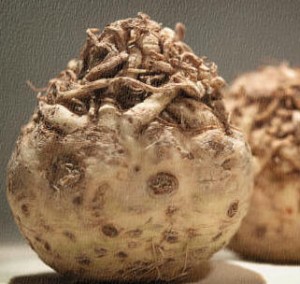 was what they called a root which grew in the hedges. It was not very tasty to say the least. In fact, only cows or donkeys would eat it.
 If you take a little time to read the whole record in the book of II Kings, Chapter 6 and 7, you will discover something absolutely remarkable. Within a 24 hour period, the entire economy was completely turned around. In 24 hours, two measures of barley sold for a single shekel, and a measure of fine flour, also for one single shekel.