
Reeds And Flax Part 2

From the Category, “The Eastern Eye”

[The Bible is an “Eastern” book. It was written many years ago in the “East” which today we refer to as “The Middle East.”  As such, there are many customs and idioms that are not familiar to the “Western” mind.

In understanding the Scriptures it is important for us to understand the culture, but it doesn’t mean that we should necessarily follow that culture. Rather, it is in the understanding of the Eastern culture that we gain light and understanding about many things in the Bible.]

In Part 1, we looked at the eastern idiom of, “a bruised reed.”  If you haven’t read that yet, just scroll down and read Part 1 first.

What Is The Smoking Flax?

The second idiom in Isaiah 42:3 is “the smoking flax.”  The verse says, “…and the smoking flax shall he not quench.”

In the times of the Bible, the people believed if there was a light in their home, God was there; the light represented God’s presence.  And so, every home always had a light in the house, even through the night. In Bible times of course they didn’t have electricity, so they utilized oil lamps.
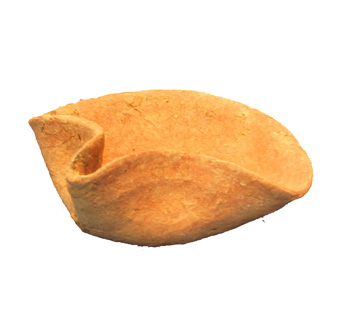
They would put oil into the shallow container and then use a flax wick.  If the oil ran out then the wick would be smoking and stinking because of no oil.  Specific duties for men and women were important, and one of the woman’s duties was to keep oil in the lamp.

If on occasion the oil ran out during the night, the husband, smelling the smoke would wake his wife so that she could go and add oil.   If the woman was tired or lazy, instead of finding the oil and adding it, she would just take off the burned smoldering part of wick. Quenching the smoking flax and just throwing that part out was simply a temporary solution.  And, she might even light the fresh part of the flax wick.  But it would then still be a burning empty wick and it would still stink.

What Makes Us Stink?

Being negative is to stink.  Here in the United States we have an idiom: change your stinking thinking.  In the east the saying is, “a negative person is the biggest stink there is in the world.”

“I can’t; I can’t.”  “This is too hard.”  “Nothing works out for me.”  “Things in my life just don’t go right and they will probably get worse.”  All negative.

Negative people are always disturbed, dejected, and full of despair.  Their problems continue to sink them lower into stinking negativity.

In this stinking condition, they don’t think properly; they are full of fear and anxiety.  They epitomize despondency.  And beware: they are not the kind of people you go to for advice!

Smoking flax refers to being miserable.  But when we reflect on the completed work of Christ we can see that he did not provide us a temporary solution.  He didn’t just quench the smoking flax; he didn’t just take off the burnt part and relight it.  Instead, he filled container with oil to overflowing!

Who Are We?

The Bible states that as born again Christians, we are complete; there is nothing lacking.  We have all received all spiritual blessings.  We have all been filled with His spirit; it is all in all.  The love of God has been shed abroad in our hearts by the holy spirit which was given to us.

When we look at the blessings God has freely given all of us because of the completed work of Christ, we can choose to change from negativity.  We can refuse to live with fear and anxiety, and instead live by faith.  We really can be people of joy and gladness.

The work of Christ was a complete work.  No matter how bruised you are today, you will never be thrown away.  And Christ’s work was not a temporary fix, but an eternal solution; you have been given the gift of eternal life.  Nothing can separate you from God’s love.

If you are a bruised reed or smoking flax, look to Christ, the author and finisher of our salvation, who died so that you could live abundantly.  A bruised reed cannot have an abundant life. Smoking flax stinks, and smoke cannot have abundant life.  We can chose to accept what Christ has accomplished for us, claiming the victory that is ours: in all these things we are more than conquerors through Him who loved us.

Isaiah 42:3
A bruised reed shall he not break, and the smoking flax shall he not quench: he shall bring forth judgment unto truth.

Colossians 2:10
And you are complete in him, which is the head of all principality and power:

Ephesians 1:3
Blessed be the God and Father of our Lord Jesus Christ, who has blessed us with all spiritual blessings in heavenly places in Christ:

Romans 5:5
And hope makes not ashamed; because the love of God is shed abroad in our hearts by the holy spirit which is given unto us.

Romans 6:23b
The gift of God is eternal life through Jesus Christ our Lord.

Romans 8:37-39
In all these things we are more than conquerors through him that loved us.

For I am persuaded, that neither death, nor life, nor angels, nor principalities, nor powers, nor things present, nor things to come,

Nor height, nor depth, nor any other creature, shall be able to separate us from the love of God, which is in Christ Jesus our Lord.

Mike Verdicchio
2011

Leave A Comment!
Do you have some thoughts about this?  We’d love to hear what you think.  To leave a comment if you are receiving this post via email or RSS, just click the title above and scroll to the bottom of the post and type in your comment.  If not, just scroll to the bottom of this post and type in your comment.

Share This Article!
To share this article on social media, like Facebook, or, Twitter, there are links below.

Resources
There are a number of books that you can read to get insight on customs, manners, idioms and meanings from the Eastern culture in which the Bible was written.  The best I know of were written by Bishop K. C. Pillai.  I have had the pleasure of listening to many recorded teaching by him.

He wrote three books, and they are hard to find, and are usually over priced.  But, if you want to you can check this link to see what Amazon has to offer. Light Through an Eastern Window

Another great resource that I have used for years is a book called, “Manners and Customs of the Bible,” by James Freeman. Mine was printed in 1972 and I know they have newer additions. For the newest edition, just click the link and it will take you to Amazon. The New Manners and Customs of the Bible (Pure Gold Classics)
More Eastern Eye Articles

Reeds And Flax Part 1

From the Category, “The Eastern Eye”

[The Bible is an “Eastern” book. It was written many years ago in the “East” which today we refer to as “The Middle East.”  As such, there are many customs and idioms that are not familiar to the “Western” mind.

In understanding the Scriptures it is important for us to understand the culture, but it doesn’t mean that we should necessarily follow that culture. Rather, it is in the understanding of the Eastern culture that we gain light and understanding about many things in the Bible.]

Figures of speech in the Bible are used for emphasis and are not what they appear on the surface.  Idioms are a figure of speech.  An idiom is a way of saying something that is peculiar to a people or culture.  Once you understand the idioms in the Bible, the true meaning becomes very clear.

There are two idioms in Isaiah 42, verse 3:  a bruised reed and the smoking flax.  To those unfamiliar with the culture of the Bible, the meaning of those idioms is not known. Here in Part 1, we’ll look at the first idiom.

Reeds grow wild. Although related to the sugar cane, which is solid, reeds are hollow in the middle.  They grow 3 to 4, and sometimes 5 feet high.  During the heat of the day they droop to the ground, but in the cool of the evening, they rise back up, straight and tall.  It was something beautiful for people to watch in the evening.

Jesus made reference to reeds in asking the people what they went out to see, John the Baptist, or the reeds.  In other words, he was asking them if they were paying attention to what John was saying, or if they were distracted by the reeds.

Ancient oriental flutes were made from the reeds.  The verse in Isaiah says, “A bruised reed shall he not break.”  If you know the idiom, “bruised reed,” then it makes the verse much clearer.

What Is A Bruised Reed?

If someone’s flute fell to the ground, it could easily break. It was then referred to as a bruised reed; that’s the idiom. A broken or bruised flute could no longer be used to play, and so, it was thrown away and another one was made.

Eastern shepherds often carried flutes and they would play them. However, they would not toss out their broken flute and make another, even though it didn’t cost anything to make a new one and it was very easy to make.  The reason the shepherd would not do that is because it was handed down to him for generations; it had a sentimental value.

So when the shepherd’s flute, or reed, was bruised, he would use wax or string to repair it.  He loved his flute just as he loved his grandfather who may have passed it on to him. He loved it so much that he repaired it and kept it for keepsake.

In this chapter, Isaiah is talking prophetically about the coming redeemer, Jesus Christ, who is of course referred to, in other places in the Bible, as the good shepherd.  He redeemed us, he laid down his life for us; he paid the full price for all sins.

Are You Bruised?

When a person is broken or bruised by sin or by indifference, that person loses the joy of having salvation; they lose their peace; they are mentally bruised and unhappy; they have no song of joy.

The invitation to salvation is simple and easy because all the work was accomplished for us by Christ.  One simply accepts Jesus as the savior, acknowledging that he is lord of all men, and that God raised him from the dead.  They then receive redemption, salvation, eternal life, forgiveness, and a lot more.

But accepting Christ does not mean that one becomes perfect, never to fall short; we all miss the mark.  When someone is in that position they need to remember Christ’s complete redemptive work.  Our falling short and missing the mark bruises us.

When we get in that position, we need to look to Christ, at his complete work.  He has cleansed us, repaired us, renewed us. He bought and paid for our forgiveness.

Jesus said, “And him that comes to me I will in no wise cast out.”  He doesn’t throw us out or toss us away because of our sins; his blood cleansed us from sin.  In the book of Hebrews it says, “I will never leave you nor forsake you.”  Jesus will not throw us out and God will never toss us away.

What Will You Choose?

When we are unhappy, miserable, and bruised, and we look to Christ and reflect on what he has done for us, he, as the good shepherd, will not break us, meaning throw us out so that we end up completely crushed.  And so we have a choice.

Our adversary would have us go through life looking at all our faults, weaknesses, and failures.  “Look what I have done; I have failed again, I have messed up again; look at how lousy I am.”  Or instead, we can stop looking at our faults, and look to Christ.

Our loving God and Father is not condemning us.  He loves us so much that He gave His Son to die, to pay the full price for all sins.  In one of the Psalms, David wrote, “Search me, O God, and know my heart: try me, and know my thoughts. And see if there be any wicked way in me, and lead me in the way everlasting.”  He was asking God to help him to get his heart right.

Too often religion condemns the one who misses the mark, and then has a list of “good” things for him to do in order to make up for the bad that he has done, all the while ignoring the real issues of the heart.  And so, people go around doing all sorts of things so that God won’t toss them out.

The Bible says that Jesus Christ is not ashamed to call us brethren.  In God’s eyes we are His children having His righteousness.  We can be confident that we will never be tossed out because of our shortcomings.  So, why not believe in Christ’s complete redemptive work and open your heart to God?

Next time, in Part 2, we will look at the second idiom in Isaiah 42:3, the smoking flax.

Isaiah 42:3
A bruised reed shall he not break, and the smoking flax shall he not quench: he shall bring forth judgment unto truth.

John 10:11
I am the good shepherd: the good shepherd gives his life for the sheep.

Romans 10:9 and 10
That if you shall confess with your mouth the Lord Jesus, and shall believe in your heart that God has raised him from the dead, you shall be saved.

For with the heart man believes unto righteousness; and with the mouth confession is made unto salvation.

John 6:37
All that the Father gives me shall come to me; and he that comes to me I will in no wise cast out.

I John 1:7b
the blood of Jesus Christ his Son cleanses us from all sin.

Hebrews 13:5b
for He has said, I will never leave you, nor forsake you.

Romans 8:1
There is therefore now no condemnation to them which are in Christ Jesus.

Psalm 139:23 and 24
Search me, O God, and know my heart: try me, and know my thoughts:

Hebrews 2:11b
For which cause he is not ashamed to call them brethren.

Mike Verdicchio
2011

Leave A Comment!
Do you have some thoughts about this?  We’d love to hear what you think.  To leave a comment if you are receiving this post via email or RSS, just click the title above and scroll to the bottom of the post and type in your comment.  If not, just scroll to the bottom of this post and type in your comment.

Share This Article!
To share this article on social media, like Facebook, or, Twitter, there are links below.

Resources
There are a number of books that you can read to get insight on customs, manners, idioms and meanings from the Eastern culture in which the Bible was written.  The best I know of were written by Bishop K. C. Pillai.  I have had the pleasure of listening to many recorded teaching by him.

He wrote three books, and they are hard to find, and are usually over priced.  But, if you want to you can check this link to see what Amazon has to offer. Light Through an Eastern Window

Another great resource that I have used for years is a book called, “Manners and Customs of the Bible,” by James Freeman. Mine was printed in 1972 and I know they have newer additions. For the newest edition, just click the link and it will take you to Amazon. The New Manners and Customs of the Bible (Pure Gold Classics)

More Eastern Eye Articles