
[The Bible is an “Eastern” book. It was written many years ago in the “East” which today we refer to as “The Middle East.” As such, there are many customs and idioms that are not familiar to the “Western” mind.]
Growing up I can remember on a number occasions my dad saying, “No one gives you something for nothing.” He understood that even if someone “gave” you something, someone paid the price for it somewhere along the line.
In Isaiah there is a verse that talks about buying water, milk, and wine without money. Understanding the Eastern culture gives great insight not only into this verse, but also what the verse implies.
It Is A Figure Of Speech
Buying without money and without price is an Eastern figure of speech. It pertains to a merchant in the marketplace who sells his goods. Those merchants would call out the price of their goods. Shoppers would then stop and pay the price for the things they wished to purchase.
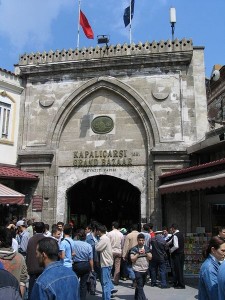
There are places like that today in some parts of the world. A few years ago, Kathy and I experienced The Grand Bazaar in Istanbul, which is one of the largest and oldest covered markets in the world, with over 1,200 shops. I can tell you they are not shy about calling out to you!
 But there were occasions in the Bible times when the merchant would cry out, “Come and buy without money and without price.” When people heard a merchant crying out, “Come and buy without money and without price,” they knew it meant someone was grateful to God for reaching a milestone in their life.
Showing Gratitude To God
When someone in that culture reached a birthday, they celebrated it by doing something nice for other people. They did this to show God their gratitude for being alive, for living another year. Since you cannot see God, bestowing kindness or gifts to others was considered giving a gift to God.
It is really the opposite of our culture. Today when someone reaches a milestone, say an anniversary or a birthday, they expect to receive gifts in honor of the event. But the Eastern culture of the Bible was much different. They celebrated by doing something good for others.
The Price Was Paid
One of the ways someone would do this was to go to a merchant in the marketplace. He would then pay the merchant for all of his water, or wine, or milk. Once he made his purchase, the merchant in turn began to cry out, “Come and buy without money and without price,”
Those that hear the merchant crying out, and especially those who are needy, can come and “buy without money.” It is free to them, but the price has been paid. The benefactor would stay at the merchant stand as people came to “buy without money,” so that they could express their thanks to the one who paid the price.
A Deeper Meaning
In the days of Isaiah, everyone understood this Eastern figure of speech. But it goes much deeper than selling water, wine, or milk. Isaiah prophesied much about the coming redeemer.
Mankind could never pay the price necessary for redemption. So, God gave His Son as payment for all of mankind. The price was paid and all legal claims were satisfied.
Because of the completed work of Jesus Christ we can have salvation at no cost to us. That’s why the Bible says that we are saved by grace. Eternal life is a free gift to us.
My dad was right; someone always pays the price. And just as those who “bought milk without price” expressed their thanks to the benefactor who paid the price for them, we too can express our thanks to God Who paid the price for us.
Isaiah 55:1:
Ho, every one that thirsts, come you to the waters, and he that has no money; come you, buy, and eat; yes, come, buy wine and milk without money and without price.
Feel free to leave a comment, even if it’s a fishing story of your own. I have a few of those and maybe you do too. We’d love to hear what you have to say.
For more “Eastern Eye” articles, Click Here, or click The Eastern Eye tab above.
Mike Verdicchio
_____________
There are a number of books that you can read to get insight on customs, manners, idioms and meanings from the Eastern culture in which the Bible was written. The best I know of were written by by Bishop K. C. Pillai. I have had the pleasure of listening to recorded teaching by him.
He wrote three books, and they are hard to find, and are usually over priced. But, if you want to you can check this link to see what Amazon has to offer. Light Through an Eastern Window
Another great resource that I have used for years is a book called, “Manners and Customs of the Bible,” by James Freeman. Mine was printed in 1972 and I know they have newer additions. For the newest edition, just click the link and it will take you to Amazon. The New Manners and Customs of the Bible (Pure Gold Classics)
You know Mike, whenever I read Isaiah 55:1,a question would always be raised. “What does it mean?” I would receive an interpretation but not as deep as your explanation. I thank God for that. My spirit is agreeing that it means the Redeemer is about to come.God gave Him to us to pay our sin and on our part, at no cost at all. If God gave us His only Son, can’t He give also things we need to live. What a great message. Keep blessed, Mike.
Hi Milagros!
Thank you for leaving a comment.
It is staggering when you think of all that God has freely given to us through the accomplishments of Christ! And then, to see that He continues to give more in the physical realm as He has promised in so many places! He truly will supply ALL our need!
God bless you,
Mike
Thanks for this. I am glad to find your explanation of the charitable origin of this wording. Economists say there’s “no free lunch,” and that appears to have been true for awhile 🙂
Thanks, David, glad you enjoyed the explanation – God bless you.
CORRECTED VERSION:Dear Mike: Once my dad landed in the hospital, but not for regular health reasons. He had become depressed and kept thinking “they” would come and take the house away. All of us would assure him it was a valuable home, their taxes are not in arrears, etc. Currently, perhaps 7 years later, he still pretty sure they are running out of money. The bankers have all assured him their investments are worth quite a bit, so much so that they could not spend it all before their demise! Especially considering the dividend checks that keep coming. Still, he persists in his doubts, as if its a shield against doom. When I visited him in the hospital those few years ago, the Lord gave me a verse for him and I wrote it down. He certainly did not embrace it and since I did not know what to make of it myself, I was rather unsure about giving it. Today I wondered what it meant. So I looked it up on the internet and found this message. How can I explain it to him? How does it apply? He is in no state of mind to listen thru’ or care to hear the story contained in your words. However, when I tried to think of another way to respond when he claims the money will be “all gone soon”, I decided I will try asking him “…and then what?”, as a way to introduce the idea that even if there is nothing left of anything, God is still there. God takes care of him. I will ask him if he remembers a time when God took care of him. Then I recalled a story from his youth, and I am pretty sure he willl concur. He and his brother decided to walk across the railroad tressle… and sure enough a train came by and they had to hold on to the bridge for dear life!(back in the 1930’s). But, fill me in on the simple meaning of this verse as applied to salvation? I have read your post and need a distillation… Thanks so much. ~Sue
Suxanne,
It’s like I said in the article,mankind could never pay the price necessary for redemption. God lovingly gave His Son as payment for all of us. The price was paid and all legal claims were satisfied.
It is because of the completed work of Jesus Christ we can have salvation at no cost to us. We are saved by God’s grace. Eternal life is a free gift to us.
This made me cry upon realizing the “free-ness” of salvation and how Jesus gave His life and gave us salvation as an absolutely free gift, a gift that we can never be able to purchase in our lifetime and not even by all the riches of the world. It is just amazing. Thank you for sharing this.
Eman, it truly is amazing how God freely gives salvation to those who believe in Jesus! How thankful we ought to be! God bless you.
This is a great message, all of us does come in a place in our life, were we cannot afford something and need God through someone to reached out for us.
I’m a medical student in my internship now because someone by the Name of Paul Hodkinson has payed for me.
I’m not seeking free thing but I know we can’t make it by ourselves.
Thanks God for his amazing provision
Richard, thanks for leaving a comment.
Yes, God’s provision is indeed amazing!
God bless you.
Thanks very much for sharing this insight. I am in a season where am deeply impressed to study Isaiah 55:1-6. This has been quite helpful to me. May the Lord richly bless you. Your labour in God’s vineyard is not in vain.
Thanks for your comment, Harum.
You might be interested in my latest book which explains dozens of verses in light of Biblical culture. Here’s a link for more information including getting a signed copy!
God bless you.
https://confidenceandjoy.com/what-does-it-mean/
God bless you!
Harun, so glad you found it helpful
You might be interested in my latest book which explains dozens of verses in light of Biblical culture. Here’s a link for more information including getting a signed copy!
God bless you.
https://confidenceandjoy.com/what-does-it-mean/
God bless you